Blog
Resources for Educators and Students

How to Teach Today’s Top Sales Trends in Your Classroom
Wondering how to prepare students for what's next in sales? In a Stukent® webinar, B.J. Allen, assistant professor of marketing at Brigham Young University and coauthor of the Stukent "Professional Selling" courseware, shared the key trends he’s seeing in professional selling for 2025 and beyond.
From unscalable selling to AI and data analytics, B.J.'s insights highlight what future-ready sales education should look like.
1. The Power of Unscalable Selling
In an era dominated by automation, the best salespeople stand out by doing what cannot be automated — building personal, human connections.
B.J. explained that personalization isn’t just a nice-to-have; it’s a differentiator. He cited an article and a LinkedIn study showing that simply mentioning a shared LinkedIn group in an outreach message increased the likelihood of getting a meeting by 70%.
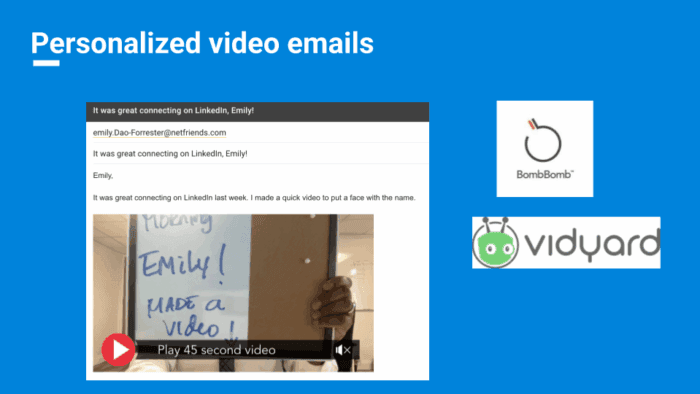
Creativity also plays a critical role in standing out. B.J. shared examples like personalized video emails, which, according to a Salesloft study, can increase open rates by 16% and reply rates by 26%. Thoughtful, unexpected touches can also create a connection, such as sending a guitar pick to a music-loving prospect. These kinds of “unscalable” actions help sellers break through the noise and leave a lasting impression.
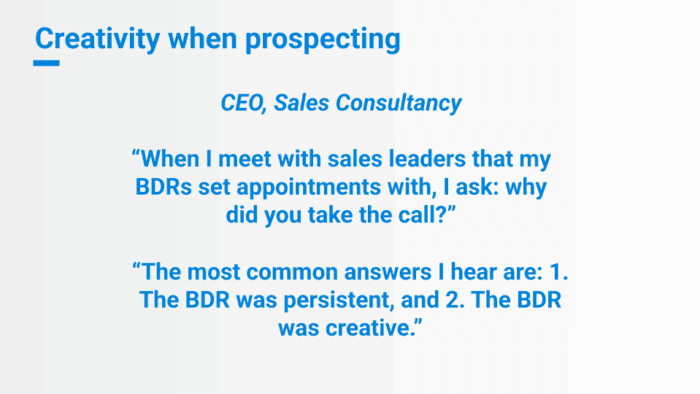
Teach It: Encourage students to think beyond scripts and templates. Assign projects that challenge them to craft personalized outreach and develop creative prospecting strategies. This practice will help them stand out among automated sales messages.
2. AI Support for Human Selling
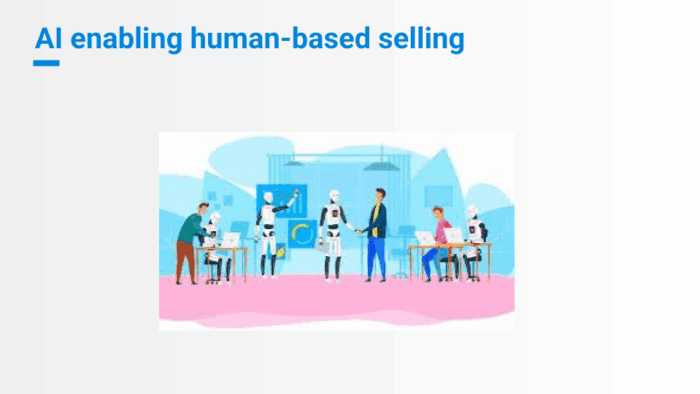
While unscalable selling focuses on the human element, AI is helping sellers prepare for those human interactions.
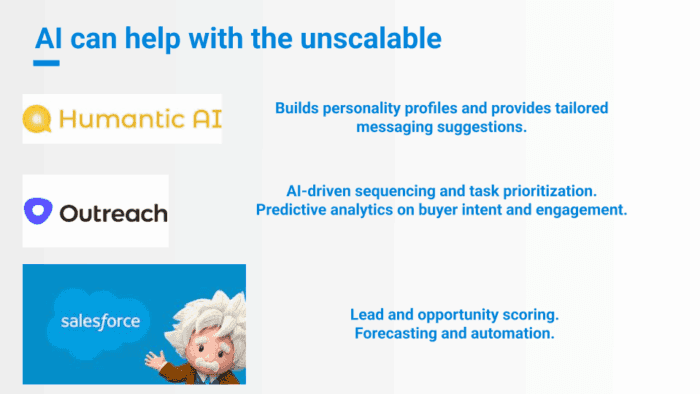
B.J. highlighted tools like Crystal and Humantic AI, which analyze a prospect’s online presence and provide personality insights to help sellers tailor their messaging. Platforms like Outreach.io and Salesforce Einstein also streamline lead scoring and prioritize the prospects most likely to convert.
Rather than replacing sellers, AI allows them to focus on what matters most — building relationships. As B.J. explained, “AI should enable the human side of selling, not eliminate it.”
Teach It: Show students how to use AI for research, personalization, and productivity. These tools can help them become more efficient while still focusing on authentic connection. Most importantly, students should understand that while AI is not replacing human insight, those who learn to work with AI will stand out in interviews, outperform expectations, and get hired faster.
3. Data-Driven Sales Skills
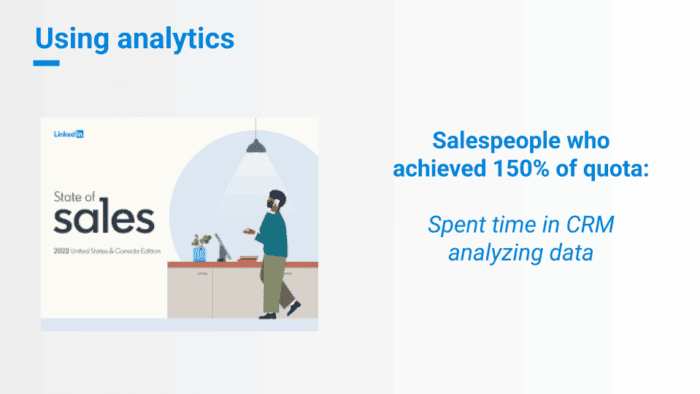
Another critical trend B.J. discussed is the importance of analytics in professional selling. According to LinkedIn’s State of Sales study, top-performing sellers spend significantly more time analyzing data in their CRM. By understanding customer behavior, tracking pipeline activity, and using data to identify high-value prospects, sellers can make smarter decisions and close more deals.
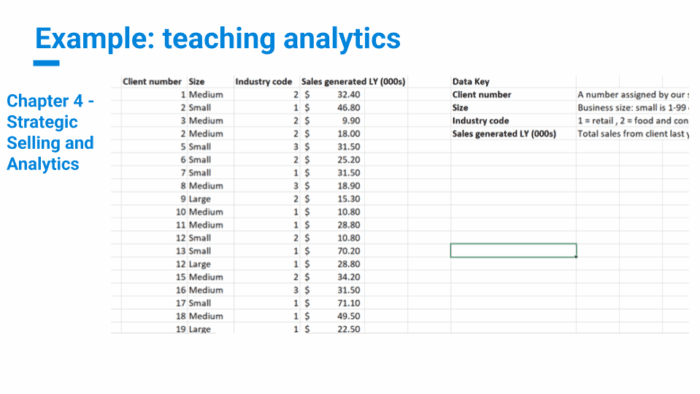
B.J. even shared a classroom example: He gives his students mock CRM data and asks them to identify the best customers and pinpoint where deals are lost in the sales funnel. This type of exercise not only builds analytical skills but also helps students see how data drives better sales outcomes.
Teach It: Add data analysis assignments to your courses to give students hands-on experience with one of the most in-demand sales skills today. Whether you're teaching forecasting, customer segmentation, or churn mitigation, mock data helps bring these skills to life.
You can find free, ready-to-use datasets on platforms like Kaggle and Google Dataset Search. These tools offer a wide variety of data you can adapt into classroom activities that teach critical thinking, decision-making, and data fluency, all within a real-world context.
Preparing Students for the Future of Sales
From creating personal, unscalable experiences to leveraging AI and mastering data-driven selling, these trends are shaping the next generation of sales professionals. With the right tools, educators have a powerful opportunity to bring these insights into their classroom.
The Stukent Sales Suite includes everything you need to teach the future of sales. With comprehensive courseware options and auto-graded Simternships®, the Sales Suite gives your students hands-on experience with:
Personalization strategies and real-world examples of how top sales reps succeed
Practical use of AI for prospect research, messaging, and efficiency
Core and advanced sales analytics, KPIs, and customer data evaluation
Ready-to-use assignments, quizzes, exams, and simulations
Whether you’re introducing students to the sales process or diving into sales analytics and leadership, the Stukent Sales Suite is designed to save you time and prepare your students for real-world success.
Request Free Access Today

Want to connect with B.J. Allen?
If you’d like to dive deeper into the sales trends discussed in this blog or learn more about B.J.’s approach to sales education, feel free to reach out. Contact him at bj_allen@byu.edu or connect with him on LinkedIn.
Read the Blog

Preparing Students for PR Careers: Industry Insights and Classroom Strategies
If you teach PR, you already know that yesterday’s strategies won’t cut it in today’s classrooms. Outdated textbooks don’t keep up with the industry's pace, and static content can leave students unprepared for real-world roles. To keep your course relevant and your students career-ready, you need flexible tools that evolve with the field.
This Stukent webinar, Preparing Students for PR Careers: Industry Insights & Classroom Strategies, explored how instructors can better align their courses with the skills the public relations field needs. If you missed it, here’s a quick recap with actionable strategies you can implement today.
Featured Panelists

Karen Freberg, a professor of toto slot strategic communications at the University of Louisville, directs The Bird’s Nest Student Agency. She brings expertise in social media, crisis communication, and applied learning. She is also the author of the Stukent "Personal Branding" courseware.

Jamie Ward, assistant professor at The University of Toledo, draws from more than a decade in the nonprofit sector and has coauthored several PR textbooks, including the Stukent "Public Relations Principles" courseware.

Randy’L Teton, a public affairs specialist slot zeus and award-winning author, offers a real-world perspective grounded in tribal relations, cultural communications, and government PR.
Actionable Teaching Strategies and Assignment Ideas
Here are five classroom strategies shared during the webinar to help you bridge the gap between coursework and real-world application in PR.
1. Community Engaged Learning
Public relations is all about building relationships, so why not help students practice by connecting with professionals in your local community? These activities help students build real-world communication skills and kickstart their professional networks.
Community forum coordination: Randy'L Teton asks her students to plan and coordinate a local panel featuring civic and cultural leaders. Projects like this sharpen students' networking, event planning, and communication skills while building valuable community connections.
Guest speakers: Invite in-person or virtual guest speakers into your classroom to give students real-world insights through presentations, personal stories, and direct interaction with industry professionals. PRSSA can be a fantastic resource for this by getting students involved, building their confidence, and promoting opportunities.
Corporate matchmaking: Teton encourages educators to use their connections to help bridge the gap between students and potential employers, a process she calls “being a corporate matchmaker.” By connecting standout students with local professionals, she not only opens doors to internships, mentorships, and job opportunities for students but also helps businesses discover emerging talent.
2. High-Stakes Practice
Real-world workplaces can be high pressure and high stakes. What better way to prepare students for these scenarios than through simulated challenges in a low-risk environment?
Jamie Ward brings PR crises to life by pairing her students with journalism majors. On camera, the PR students face unscripted, hard-hitting questions from journalism students acting as reporters, reinforcing the fundamentals of media training, crisis ethics, and professionalism under pressure. Ward says she also uses tools such as “SignalAI to bring [in] crisis simulations, guest speakers, case studies, etc., building the classroom around those experiences so students get as much practical content as they can.”
By transforming theory into authentic practice, Ward ensures her students graduate with more than knowledge — they leave with the confidence, composure, and critical thinking skills to navigate any PR storm. It's a tactic you can use in your classroom, too!
3. Real-World Projects
Once students master the basics, it’s time for them to put their skills into action. Long-form projects push them to combine everything they’ve learned — including content creation, performance measurement, and teamwork — into a single, high-impact effort. During the webinar, panelists shared strategies for guiding students through full-scale campaigns that mirror today’s PR landscape, including emerging AI tools and real-world client work.
For example, ask students to build a fully realized AI persona. Using tools like ChatGPT or Gemini, they can craft a voice, values, and niche for a virtual consumer. Then, they can use image generation tools such as Midjourney or DALL-E to bring their persona to life visually.
Students can now design a full PR campaign around their persona, complete with objectives, messaging strategy, target audience segmentation, media outreach plans, and measurable KPIs. This project encourages critical thinking about authenticity, messaging control, and the blurred lines between human and AI influence in modern media.
Karen Freberg also recommends offering students the opportunity to pitch a final project of their own design. Giving students choice helps them feel more invested in the learning process. “If you’re able to ignite [their] passion but also allow [students] to implement their skills in real time, it creates a well-rounded experience," Freberg says. Whether it’s a niche nonprofit or a campaign concept tied to a cause they care about, students often go above and beyond when given the space to connect classroom learning to a cause that is meaningful to them.
Finally, one of the most impactful ways to simulate real-world experience is through student-run agencies. These programs give students the opportunity to work with real clients in a structured, low-risk environment. Whether housed in a course or operated as an extracurricular activity, student agencies sharpen teamwork, client communication, project management, and presentation skills.
4. Ethical AI
With AI tools more integrated than ever into PR workflows, students must be prepared to use them responsibly.
A powerful way to engage students in responsible AI use is by having them develop ethical AI policies for their campaigns and content. These guidelines help them use AI strategically, avoiding overreliance while protecting learning outcomes. The result? Students learn to use AI effectively, building integrity, efficiency, and innovation. This assignment also sparks important conversations about professionalism, transparency, and using AI responsibly without sacrificing creativity or speed.
5. Analysis Tools
Have students do hands-on work with data analytics and professional tools to give them an advantage once they get into the field.
Ward pointed out a common gap in PR education — data and analytics. She emphasized the value of giving students hands-on experience with real-world tools to track KPIs and measure campaign performance, skills that make them more marketable and job-ready.
Ward's students gain experience in platforms such as Google Analytics, Brandwatch, and Hootsuite. By mastering these tools before graduation, students leave the classroom with the analytical expertise employers demand and the confidence to put it to work on day one.
What Employers Want from New Grads
So, what do employers really want in new PR hires? According to our panelists, technical skills are nonnegotiable, and writing remains the bedrock of the profession. Strong grammar and clear communication are expected.
Panelists also stressed the importance of AI literacy. Ward explained, “Before graduating, students need to understand the intricacies of AI — not just how to create content, but how to interpret data and use these tools to manage real campaigns effectively.”
Soft skills are just as critical as technical expertise. The ability to build trust, connect with diverse audiences, and collaborate effectively can set candidates apart. Panelists also highlighted the importance of being teachable and open to feedback. In PR, learning doesn’t end at graduation. Practitioners who ask questions, adapt quickly, and grow on the job are the ones who thrive.
Watch the Webinar for More Insights
If you appreciated this glimpse of the panelists’ insights, the full recording takes a deeper dive into practical strategies you can put to work right away. Watch the webinar to discover more ways you can use real-world learning to boost student engagement and career readiness in your PR course.
Read the Blog

How to Improve Classroom Efficiency with Project Management and Supply Chain Tactics
If your course schedule feels chaotic, your grading comes in waves, and your prep time never seems to shrink, you’re not alone. Teaching can quickly become reactive instead of intentional.
The good news? A few small adjustments can make a big difference. By borrowing proven tactics from project management and supply chain management, you can organize your course in a way that saves time and improves the student experience.
Here’s how to get started.
Set Expectations Early and Clearly
Before focusing on time management or grading workflows, examine your course expectations. Are they clearly defined? Are they easy for students to access?
Make sure students understand the basics: behavior standards, participation expectations, response times, and assignment requirements. Many of the issues that take time to manage later — missed deadlines, unclear communication, repeated questions — can be avoided by outlining expectations in your syllabus or learning management system.
A little clarity up front can make the rest of the semester smoother. Just like in supply chain management, it is important to oversee all the steps and ensure the customers' (students’) order (quality education) is fulfilled.
Know What to Prepare and What to Let Happen
Not every part of your course needs to be planned in advance. In fact, some things are better handled as they arise. The key is knowing when to prepare and when to wait.
If you always get questions about a particular assignment, take a proactive approach. Create a rubric, record a short explainer video, or add clarification to your LMS. If your students usually struggle with a specific chapter, consider adding a discussion prompt to encourage more critical thinking.
Other situations may only affect a small number of students. For those, a reactive strategy might be more efficient. For example, if only two or three students tend to run into a minor tech issue, it probably doesn’t make sense to create a dedicated resource.
Try reviewing your course and sorting items into two categories: push (prepare in advance) and pull (handle as needed). This will help you focus your time where it matters most. Most individuals and organizations use a hybrid approach of push and pull in their supply chain strategy to help maintain efficiency.
Balance the Grading Load
Grading tends to come in waves. One week, you’re reviewing dozens of submissions, and the next week, your gradebook is quiet. That kind of inconsistency can be hard to manage, and overcorrecting can cause issues later on.
While a business may order too much inventory after a surge in demand, some instructors might be less responsive after an influx of manually graded assignments. To reduce the grading whiplash, try assignment leveling. Stagger your due dates so that heavier assignments are followed by lighter, auto-graded work. This creates a more consistent flow and helps avoid last-minute stress. Another tactic is to review all assignment deadlines for all courses to see if many courses have the same or similar due dates, then adjust these dates to provide yourself some breathing room.
You can also take advantage of tools such as Simternships®. These auto-graded simulations offer students hands-on learning while freeing up your time to focus on higher-impact work.
And don’t forget to communicate your grading timelines with students. Letting them know that longer assignments may take more time to grade helps set realistic expectations and reduces inbox pressure. This also ties into the push and pull aspect: If you anticipate that students will be asking when they will receive their assignments, add a note to the syllabus about when students can expect their grades.
Reuse and Upcycle Course Materials
Each time you teach a class, you build valuable materials and insights. Instead of starting from scratch every term, look for ways to reuse what already works.
Consider what you can repurpose. A well-received assignment can be brought back with updated examples. A discussion prompt that generated thoughtful responses can be used again. This can even include feedback provided to students — save your most common comments in a Word document so you can later copy and paste them.
This closed-loop strategy not only saves time but also helps you build a more consistent course experience over time.
Take a Close Look at Your Schedule
The best project managers know how important it is to manage their time. Time management starts with awareness. One useful activity is to write down everything you do during a typical day. Include meetings, grading, prep, research, errands, and even meal preparation.
Once it’s all on paper, look for patterns or wasted time. Maybe meetings are scattered in ways that break your focus. Maybe short blocks of time between commitments are lost.
From there, create a simple plan to improve. Try grouping meetings back to back so you can reclaim larger chunks of time. Use brief breaks for administrative tasks such as answering emails or reviewing short assignments. And protect your most productive hours — whether morning or afternoon — for your most important work. While it is not always possible to change department meeting times, look for other items that are more flexible — it is okay to say “no, this time does not work for me” and suggest better times, especially when it comes to service items.
Clarify Performance Metrics
Students perform better when they know how they’re assessed. That’s why it’s important to clearly communicate what’s being measured, how it’s measured, and what good performance looks like.
Use rubrics whenever possible and include grading guidelines in your LMS. If participation is graded, explain how students earn those points. Make sure your expectations are consistent throughout the term. The best projects have well-defined requirements with matching metrics.
It’s also a good idea to track your own metrics. Monitor how much time you spend grading, setting up courses, hosting office hours, and responding to student questions. This gives you a baseline understanding and can help you set more realistic boundaries going forward.
Consider using AI tools or tracking software to help analyze where your time is going. For example, you could ask ChatGPT to review a sample weekly schedule and suggest a more efficient structure based on your peak focus hours and recurring responsibilities. Tools such as time-tracking apps, spreadsheets, or even a digital assistant can surface trends you might otherwise overlook.
These insights can guide better decisions moving forward.
Reflect and Reset for the Next Term
At the end of the course, set aside time for a short review. Ask yourself what went well, what created unnecessary stress, and where students struggled.
Did an assignment take longer to grade than expected? Was there a topic that confused more students than usual? Were your meetings scheduled at the right times for focused work?
These insights can help you improve your course design and schedule before the next term begins. You might also begin collecting data like average grading time or course setup time so you can track changes over time.
Small Shifts, Big Results
Improving classroom efficiency doesn’t require a complete overhaul. Most of the strategies mentioned here are simple shifts — clarifying expectations, reusing effective content, balancing your grading, or adjusting your calendar to match your focus.
And if you're looking for resources to support both efficiency and engagement, tools like Simternships can be a great addition. These real-world simulations are auto-graded, easy to implement, and give students hands-on experience aligned with course objectives.
With a few intentional changes, you can create a more organized, balanced, and sustainable teaching experience. And that means more time and energy for what matters most — teaching.
Learn more about Stukent® Simternships here.
Read the Blog